
Microchip PIC16LF819T-I/SO 8-Bit Flash Microcontroller: Data Sheet and Design Guide
The Microchip PIC16LF819T-I/SO stands as a versatile and power-efficient solution in the realm of 8-bit microcontrollers. Engineered for a broad spectrum of embedded control applications, this MCU combines robust performance with low-power operation, making it particularly suitable for battery-powered and portable devices. Its integration of advanced peripherals and a compact footprint empowers designers to create sophisticated yet cost-effective systems.
Housed in a 18-pin SOIC package, the PIC16LF819T-I/SO is built upon Microchip's enhanced mid-range core with a 16-level deep hardware stack and a 35-instruction set. Operating at a maximum frequency of 20 MHz, it delivers a solid 5 MIPS of performance. A key feature of this device is its nanowatt-technology power management, which allows for extremely low current consumption in various modes (Sleep, Idle, Active), dramatically extending battery life.
The microcontroller boasts 8 KB of self-programmable Flash memory and 256 bytes of EEPROM data memory, providing ample space for application code and critical data storage that must be retained after power cycles. It is supported by 368 bytes of RAM.
Its peripheral set is rich and tailored for embedded control:
Analog-to-Digital Converter (ADC): A 10-bit ADC with up to 8 channels enables precise measurement of analog signals from sensors.
Timers: Two 8-bit timers and one 16-bit timer offer flexible timing and counting capabilities.
Communication Interfaces: It includes a Master Synchronous Serial Port (MSSP) module that can be configured as either I²C or SPI, facilitating communication with a vast ecosystem of peripheral chips like sensors, memories, and displays. A Universal Synchronous Asynchronous Receiver Transmitter (USART) provides serial communication.
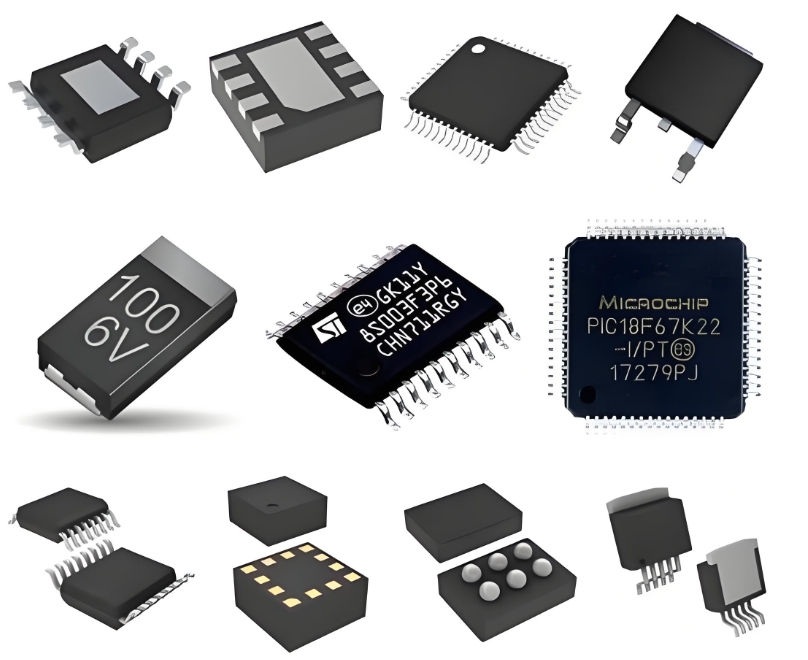
Capture/Compare/PWM (CCP) Module: This is crucial for generating pulse-width modulated signals to control motor speed, LED intensity, or for capturing the timing of external events.
In-Circuit Debugging (ICD): Integrated debugging capability allows for easy firmware development and validation, speeding up the design cycle.
Designing with the PIC16F819 requires careful attention to its electrical characteristics detailed in the datasheet. Key design considerations include:
Power Supply Decoupling: Proper use of decoupling capacitors near the VDD and VSS pins is critical to ensure stable operation and minimize electrical noise.
Clock Source Configuration: Designers can choose from multiple oscillator options (e.g., external crystal, internal RC oscillator) based on the application's need for accuracy and cost.
I/O Pin Planning: Each pin is multifunctional. The design must carefully manage the configuration of these pins to avoid conflicts between peripherals like the ADC, serial ports, and general I/O.
Low-Power Design Strategies: Leveraging the SLEEP instruction and strategically disabling peripheral modules when not in use are essential techniques for minimizing power consumption.
ICGOOODFIND: The PIC16LF819T-I/SO is a highly integrated, low-power 8-bit microcontroller that offers an excellent balance of performance, features, and energy efficiency. Its comprehensive peripheral set, including ADC, communication interfaces, and PWM, makes it a strong candidate for a wide range of embedded control applications, from consumer electronics and industrial systems to Internet of Things (IoT) endpoints.
Keywords: Low-Power, 8-Bit Microcontroller, Flash Memory, nanowatt-technology, Embedded Control.

